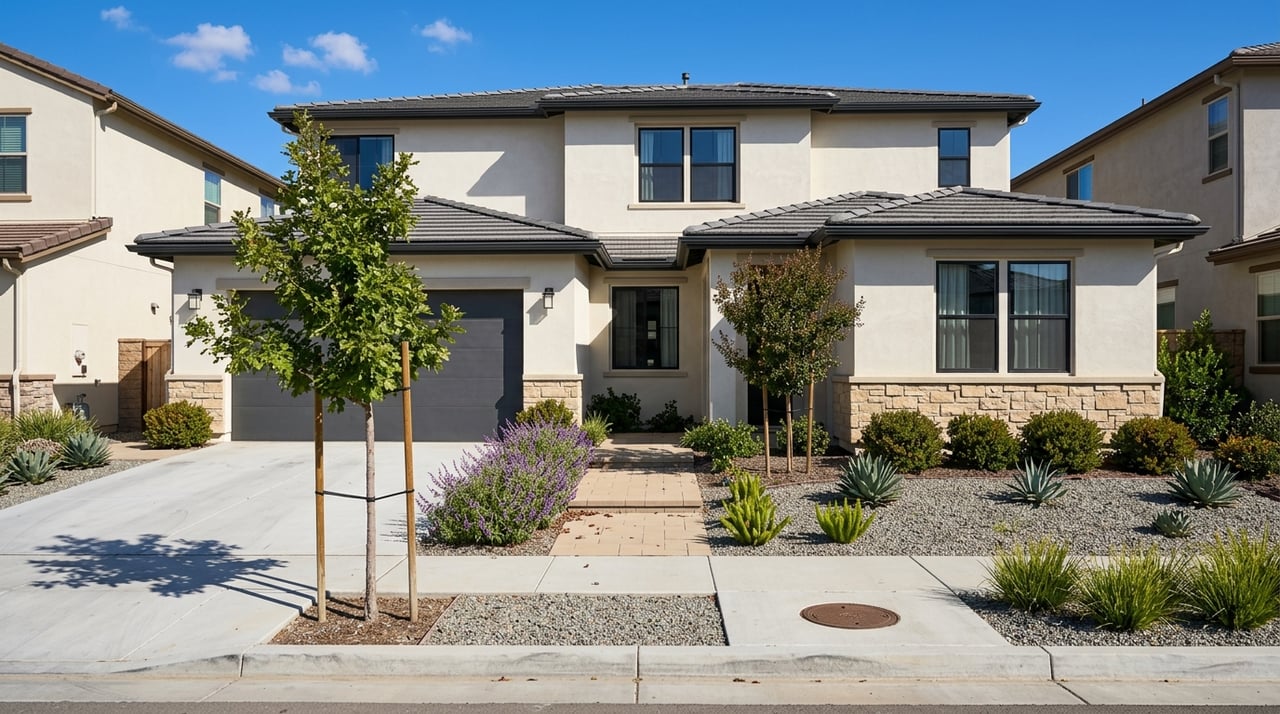
How Rancho Cordova Growth Is Reshaping Its Housing Market
July 9, 2026
July 9, 2026
If Rancho Cordova feels like it is changing fast, you are not imagining it. More people, more jobs, new construction, and major infrastructure projects are all reshaping how buyers and sellers experience this market. If you are trying to decide when to buy, where to look, or how to position your home for sale, understanding where growth is happening matters just as much as knowing that growth exists. Let’s dive in.
Rancho Cordova is growing on more than one front. The U.S. Census Bureau estimates the city’s population at 87,554 as of July 1, 2025, which is up 10.4% from the 2020 base. At the same time, the city describes itself as one of the Sacramento region’s largest employment centers, with more than 65,000 workers.
That combination matters for housing. When population rises and employers keep adding jobs, more households look for places to live, whether that means buying a newer home, choosing an established neighborhood, or moving within the city.
The city is also planning for long-term growth, not just reacting to a hot market cycle. Its economic development efforts focus on attracting headquarters, expansions, high-wage jobs, and sectors such as technology, AI, robotics, advanced manufacturing, and research and development.
Rancho Cordova’s recent numbers show how active that growth has been. The city says it ranked as the fifth fastest-growing city in California among cities over 30,000 residents, with a 3.2% population increase from January 2024 to January 2025, 620 new home sales in 2024, and a record 1,100 development permits.
One of the biggest mistakes buyers and sellers can make is treating Rancho Cordova like a single, uniform housing market. In reality, it behaves more like several overlapping markets.
The newer master-planned growth areas on the southeast and east sides are different from the older built-out parts of the city. Folsom Boulevard adds another layer, with redevelopment and transit-oriented infill shaping that corridor in ways that do not look the same as greenfield new construction.
That is why two homes in different parts of Rancho Cordova can attract very different buyers, pricing ranges, and timelines. If you are making a move here, local context is everything.
Most of Rancho Cordova’s larger new-home pipeline is concentrated in growth areas rather than the older core. The Sunridge Specific Plan is primarily south of Douglas Road, east of Sunrise Boulevard, and north of Grant Line Road.
The Rio Del Oro Specific Plan sits northeast of Sunrise Boulevard and Douglas Road. The city lists Rio Del Oro at an estimated 12,189 dwelling units, which gives you a sense of just how significant that area is to Rancho Cordova’s future housing supply.
Other active projects named by the city include Montelena, Arista Del Sol, The Ranch, Grant Line 220, and Sierra Sunrise. Together, these projects help explain why so much buyer attention is focused on the south and east side of town.
If you are shopping in newer communities, you will often see features that appeal to today’s buyers. That can include newer layouts, updated finishes, and less immediate maintenance risk compared with older homes.
The tradeoff is usually price. Newer master-planned communities tend to command a premium, and buyers may also need to factor in builder pricing, lot premiums, or a different resale pace than in more established neighborhoods.
If you own an older home, new construction becomes part of your competition. Buyers comparing your property to a newer option may focus more on condition, updates, and ease of move-in.
That does not mean older homes cannot sell well. It does mean pricing, preparation, and presentation matter even more when buyers have fresh inventory to compare against.
Not all growth in Rancho Cordova is happening through large new subdivisions. Folsom Boulevard is a separate growth corridor shaped more by redevelopment and transit-oriented infill.
The city says the Folsom Boulevard Specific Plan was created to repurpose and revitalize the corridor around existing and planned light rail stops. This makes it a different kind of housing story, one tied to infill, reuse, and corridor improvement rather than large-scale expansion on open land.
Mills Crossing is one example of that shift. City project pages describe it as market-rate townhomes and multifamily housing intended to further revitalize Folsom Boulevard near Folsom Lake College and the Mills Station Arts and Culture Center.
For buyers and sellers, this means Rancho Cordova’s growth is not only outward. In some areas, it is also about reinvestment and repositioning existing parts of the city.
Rancho Cordova is not a uniformly new-build market, and that matters. The city’s housing element says a large share of the housing stock is more than 30 years old.
Based on age alone, the housing element estimates that 76.0% of housing stock may need extensive repair or replacement. It also notes that ongoing maintenance likely lowers the practical share needing rehabilitation to about 30% to 35%.
That helps explain why established neighborhoods can behave differently from the city’s newer communities. Buyers may find lower entry prices in older areas, but they should pay closer attention to condition, maintenance history, and renovation budgets.
For sellers, older homes can still compete well when they are prepared thoughtfully. Clean presentation, smart repairs, and clear pricing can make a big difference, especially when a home is competing with newer product nearby.
As of May 31, 2026, Zillow reports Rancho Cordova’s average home value at $536,751, down 3.0% from the prior year. Homes are going pending in about 14 days, and for-sale inventory stands at 253.
That paints a balanced picture. Rancho Cordova remains relatively affordable compared with many higher-priced Sacramento suburbs, but current data does not suggest a dramatic pullback. Instead, it points to a market with real demand and more nuance beneath the surface.
The Census Bureau’s 2020-2024 ACS estimate puts the median value of owner-occupied homes at $477,600. That uses a different method than Zillow, but it supports the same broad idea: Rancho Cordova still offers price points that can be more accessible than some nearby suburban markets.
The clearest sign of Rancho Cordova’s changing market may be how different its zip codes look. In 95670, Zillow shows an average home value of $481,805, down 2.6% year over year, with 91 homes for sale and a 21-day median pending time.
Realtor.com’s May 2026 snapshot for 95670 shows a median listing price of $499,000, 119 homes for sale, and a median of 35 days on market. That points to a relatively more affordable submarket with active demand.
In 95742, the pricing shifts upward. Realtor.com shows a median listing price of $649,900, 344 homes for sale, and 48 days on market, with a median sold price of $566,495.
In simple terms, the higher-priced newer-construction side of Rancho Cordova is not moving exactly the same way as the tighter, more affordable parts of the city. Buyers may have more room to negotiate in some of the pricier submarkets, while more budget-friendly areas can feel more competitive.
Neighborhood-level data within 95742 helps show how newer communities are being valued. Realtor.com’s snapshot lists Anatolia Village at $645,000, Sunridge Anatolia at $619,471, Sunridge Park at $613,281, and Kavala Ranch at $649,700.
By comparison, lower-priced pockets such as Lincoln Village at $450,000, Walnut Wood at $436,713, and Capital Village at $484,886 sit materially below those newer communities. While every home is unique, the pattern is consistent with Rancho Cordova’s larger development map.
For buyers, this often comes down to priorities. If you want newer construction and a more recently built setting, you may need to pay more and accept a slower-moving submarket. If price flexibility matters most, established neighborhoods may open up more options.
Housing growth does not happen in isolation. Infrastructure helps determine how easily a city can absorb change, and Rancho Cordova has several major projects in motion.
The city says 2025 transportation projects represented a $55 million investment. These include the Chrysanthy Boulevard expansion, Sunrise Boulevard rehabilitation, Lincoln Village traffic calming, the Chase Drive and American River Parkway connection, and upcoming work on Mather Field Road, White Rock Road, and Zinfandel Drive.
The city also says the US 50/Rancho Cordova Parkway interchange project will add capacity and improve access to the city’s employment center. On top of that, the Fiber City project is expected to eventually connect every home and business with fiber internet.
For many buyers, these kinds of upgrades influence perception as much as home features do. Better access, improved roads, and citywide utility improvements can help support demand over time.
If you are buying in Rancho Cordova, your biggest decision may be choosing between newness and value. Newer areas in the south and east side growth zones often offer newer homes and less near-term maintenance, but they usually come with higher price tags.
Established neighborhoods may offer a lower entry point and more room to negotiate. At the same time, older housing stock means you should look carefully at condition, deferred maintenance, and the likely cost of future updates.
This is where a neighborhood-by-neighborhood strategy matters. A home that looks like a deal on paper can become more expensive if repair needs are significant, while a higher-priced newer home may come with fewer short-term surprises.
If you are selling, Rancho Cordova’s growth is supportive, but it is not automatic. More jobs, more residents, and city investment can expand the buyer pool, but current market snapshots also show flat-to-lower prices in some segments, longer marketing times in pricier submarkets, and meaningful active inventory.
That means strong results still depend on execution. If your home is in an established neighborhood, preparation and pricing become especially important when buyers are also comparing newer options in Rio Del Oro, Sunridge, and nearby growth areas.
This is where concierge-style seller prep can really matter. Thoughtful improvements, staging, and strong photography can help older homes stand out and connect with buyers who want value without taking on too much uncertainty.
Rancho Cordova’s growth is reshaping its housing market, but not in one simple direction. The city is adding population, jobs, housing, and infrastructure, yet the results look different depending on where you are in town.
The newer master-planned side of the city is being driven by large-scale development and higher price points. The older core is being influenced by redevelopment, infrastructure upgrades, and gradual reinvestment.
If you are buying or selling, the smartest move is to look beyond citywide averages. Rancho Cordova is best understood as multiple connected markets, and your best strategy depends on which part of the city fits your goals.
If you want local guidance on how Rancho Cordova’s growth affects your next move, Sac Platinum Realty is here to help with a clear, neighborhood-level strategy.
Stay up to date on the latest real estate trends.
Real Estate
Real Estate
Real Estate

Real Estate
Real Estate