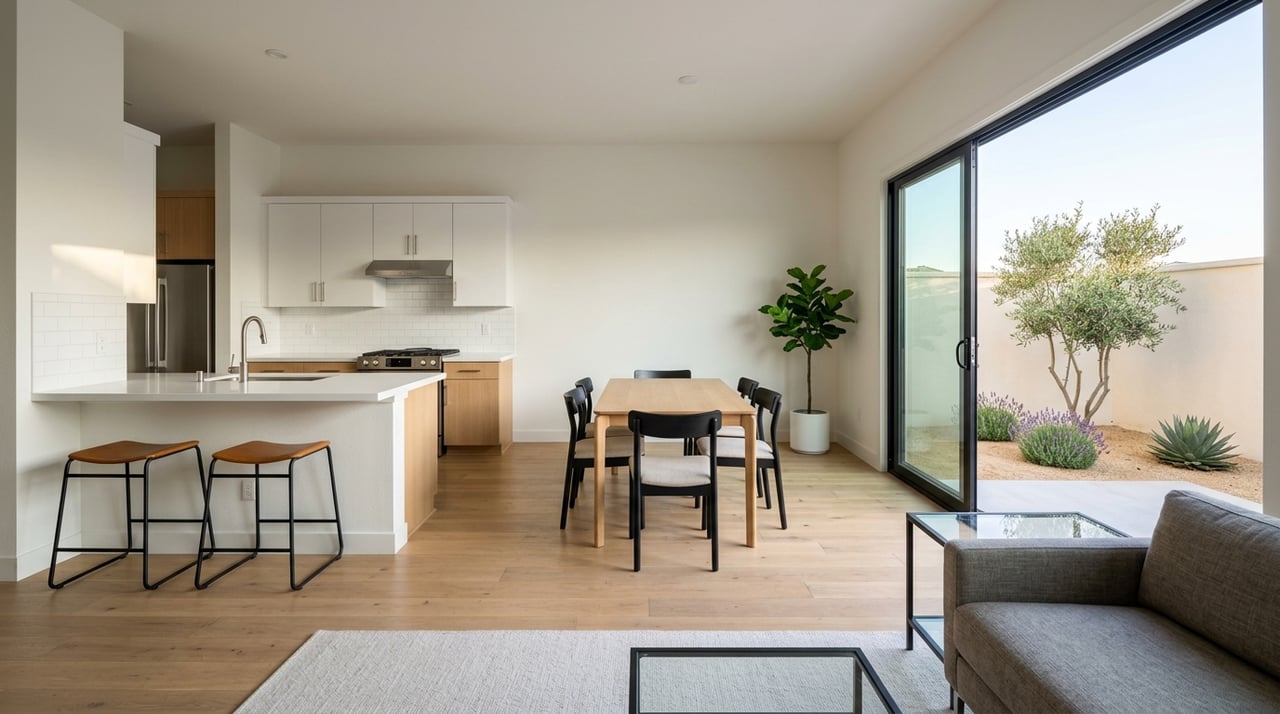
Is Citrus Heights The Smart Entry Point For Sacramento Buyers
June 11, 2026
June 11, 2026
If Sacramento-area prices have made homeownership feel just out of reach, Citrus Heights may be the market that brings the conversation back into range. For many buyers, the challenge is finding a place that feels practical, connected, and affordable enough to enter without pushing the budget too far. In this guide, you’ll see where Citrus Heights sits in the regional price ladder, what kind of homes you’re likely to find, and why many buyers see it as a smart place to start. Let’s dive in.
If you are comparing suburbs around Sacramento, Citrus Heights stands out for one simple reason: it is priced below many nearby alternatives. Redfin city data shows a median sale price of $459,763 in April 2026, which was down 7.9% year over year.
That price point puts Citrus Heights below Sacramento at $494,745, Rancho Cordova at $514,734, Carmichael at $551,000, Roseville at $629,175, Fair Oaks at $714,631, and Folsom at $759,608 in the same reporting cycle. For buyers trying to get into the market sooner, that gap can make a meaningful difference.
Census Reporter’s 2024 ACS profile also supports this positioning, showing a median owner-occupied housing value of $471,800. Taken together, the numbers suggest Citrus Heights functions as a mid-market suburban entry point, not a premium-priced suburb.
When prices rise across the region, many buyers end up adjusting one of three things: location, home size, or timing. Citrus Heights can be appealing because it may let you buy sooner without leaving the Sacramento metro conversation entirely.
That does not mean it is the right fit for everyone. It does mean buyers who want a suburban setting and need to stay price-aware may find more realistic options here than in higher-priced nearby communities.
If your goal is to stop renting, start building equity, and stay connected to the broader Sacramento area, Citrus Heights deserves a serious look. It often fits buyers who value function and access over chasing the newest housing stock.
Citrus Heights is not a market defined by large waves of brand-new subdivisions. The city describes its housing stock as primarily single-family homes, and says most single-family homes have at least three bedrooms.
That can be good news if you want a more traditional suburban layout. You are more likely to find established neighborhoods and existing homes than master-planned new construction communities.
The city also notes that Citrus Heights is about 98% built out. In practical terms, that means there is limited land left for major new development, so the housing supply tends to come from resale homes, infill, redevelopment, and rehabilitation.
One of the biggest reasons Citrus Heights can be more attainable is also one of its main tradeoffs. The city says much of the housing stock is aging, with a majority built before 1979.
For you, that may mean more character, mature neighborhoods, and potentially a lower price point than newer suburbs. It may also mean looking more closely at condition, updates, and future maintenance needs when you shop.
This is where buyer guidance matters. Older homes can offer strong value, but you want to understand what has already been improved, what may need attention later, and how that fits your budget beyond the mortgage payment.
Citrus Heights’ Housing Element for 2021 through 2029 says the city must accommodate 697 RHNA units. Because the city is already largely built out, future change is likely to come more through infill, redevelopment, and rehabilitation than through large greenfield expansion.
That matters because the city you buy into may continue evolving, just not in the same way as a fast-growing outer-ring suburb. Instead of endless new subdivisions, you are more likely to see updates to existing areas and redevelopment in key corridors.
For some buyers, that is a plus. It can mean buying into an established community with room for thoughtful improvement over time.
Affordability alone is not enough if your day-to-day routine becomes harder. Citrus Heights has a practical regional position that helps support its appeal as an entry point.
The city says it is centrally located between major freeways and highways, with I-5, I-80, US 50, and US 99 all within 3 to 11 miles. It also notes that Sacramento International Airport is about 20 miles away, and Amtrak is accessible in Roseville about 10 miles from the city.
The city’s consolidated plan says most residents commute outside Citrus Heights for work. Paired with the ACS mean commute time of 28 minutes, that supports the idea of Citrus Heights as a commuter-friendly suburb for buyers who need access to the wider Sacramento job market.
Another reason buyers look closely at Citrus Heights is simple: convenience matters. If you are balancing work, errands, commuting, and family schedules, the ability to handle everyday life close to home can be a major quality-of-life benefit.
The city’s Business & Shopping page says Citrus Heights is home to Sunrise MarketPlace, a business improvement district with more than 600 businesses. That includes major retailers such as Costco, Sam’s Club, Walmart, Target, Macy’s, JCPenney, Lowe’s, Best Buy, and Kohl’s.
That kind of retail concentration supports the practical side of homeownership. For many buyers, especially first-time buyers, having shopping, household needs, and daily errands nearby makes a community easier to live in from day one.
Citrus Heights also has an interesting mix of current convenience and future change. The city’s Sunrise Mall FAQ says the mall is still open for business with more than 90 retailers, while also being the city’s largest redevelopment opportunity as part of a long-term specific-plan process.
For you, that signals two things at once. First, the area still offers active shopping and services today. Second, some commercial areas are still evolving, which may shape how parts of the city change over time.
This does not guarantee any one outcome, but it does reinforce Citrus Heights as a place where buyers can find current functionality alongside longer-term redevelopment potential.
For many Sacramento-area buyers, the answer is yes. Citrus Heights looks especially smart if you want to buy sooner, stay below the price point of many nearby suburbs, and live in an established community with strong regional access.
It is especially worth considering if you are comparing it against higher-priced markets like Roseville, Fair Oaks, and Folsom. Even compared with Sacramento and Rancho Cordova in the same Redfin cycle, Citrus Heights came in lower.
The main tradeoff is clear. You are usually choosing older housing in a built-out city rather than chasing brand-new construction and large master-planned growth.
For many buyers, that is a reasonable exchange. If your priority is getting into homeownership with a practical budget, established housing stock, freeway access, and strong retail convenience, Citrus Heights checks a lot of important boxes.
Buying your first home or your next home is easier when you have local guidance that helps you compare tradeoffs clearly. If you want help weighing Citrus Heights against other Sacramento-area options, connect with Sac Platinum Realty for clear advice and a plan built around your goals.
Stay up to date on the latest real estate trends.

Real Estate

Real Estate

Real Estate
Real Estate

Real Estate