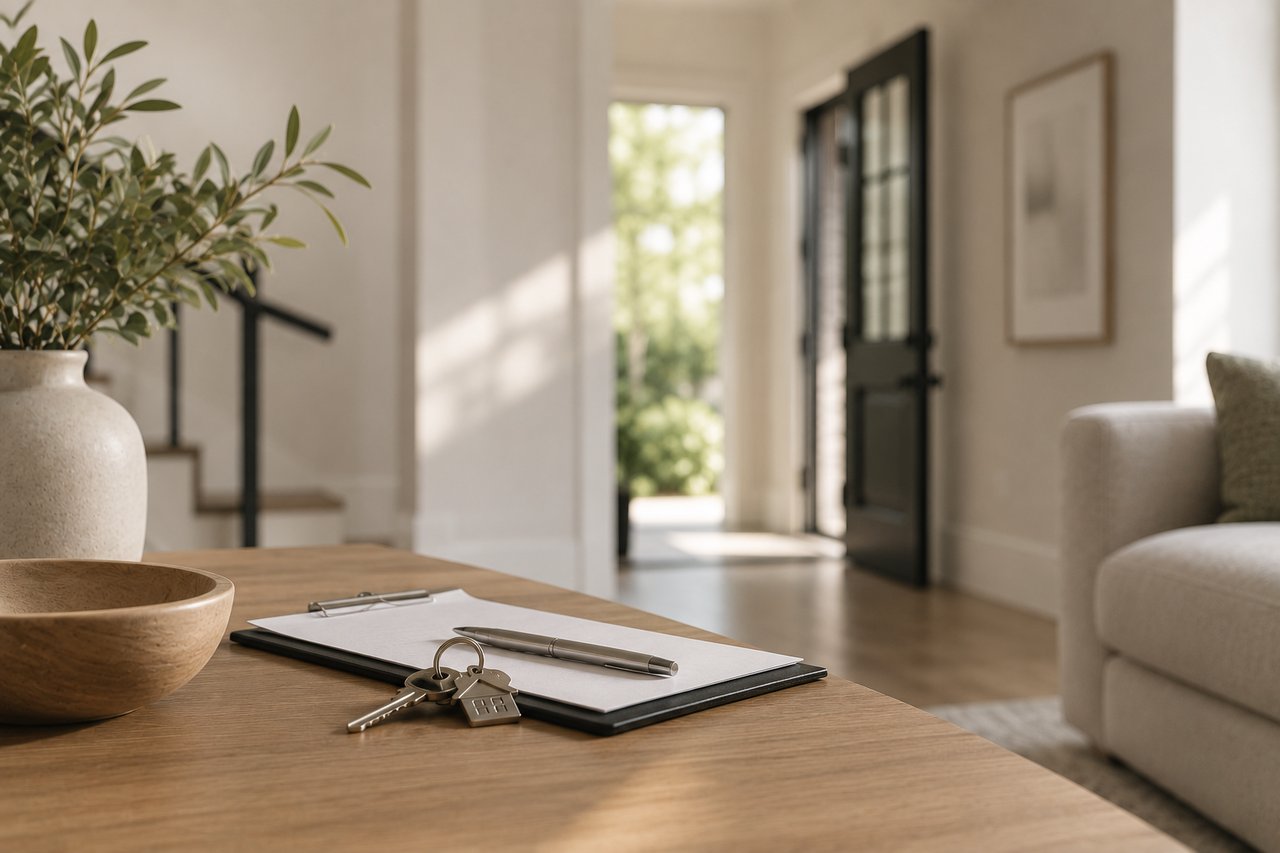
Open House Truth
Real Estate Mark Daya September 9, 2026
Real Estate Mark Daya September 9, 2026
Ask most sellers whether they want an open house and the answer is usually yes. It sounds productive. People coming through, looking at your home, generating interest. It feels like marketing happening in real time.
The reality of what open houses actually accomplish — who attends, what they do afterward, and why agents hold them — is more complicated than most sellers know. And understanding it clearly helps you make better decisions about how your home gets marketed.
This is not an argument against open houses categorically. It is an argument for seeing them accurately — so you can evaluate whether they make sense for your specific situation rather than accepting them as a default part of the marketing plan.
The Data on Who Actually Attends
Industry data is consistent on this point: fewer than 10% of homes sell directly to an open house visitor. Only 3 to 5% of buyers report finding their home through an open house. The conversion rate of open house attendees to actual buyers of that specific property is, by most analyses, close to zero.
So who is actually walking through your home on a Sunday afternoon? The honest breakdown, confirmed by agents who have held thousands of open houses, is roughly this: neighbors who are curious about your home and what it might tell them about their own value, buyers who are early in their search and not yet ready to make decisions, agents scouting for their own buyer clients, and occasionally someone genuinely interested in purchasing who simply did not want to schedule a private showing.
That last category — the interested buyer who needed the open house as a low-friction entry point — is real and worth acknowledging. Some buyers who would not have scheduled a private showing do walk through an open house and make offers. But they are the minority of attendees, not the majority. The majority are people who will not be buying your home.
This is not a criticism of those attendees. Neighbors have every legitimate reason to be curious. Early-stage buyers are doing exactly what they should. But sellers who believe their open house is full of ready, motivated buyers ready to write offers are operating on a misconception that leads to disappointment when Sunday's traffic does not produce Monday's offers.
The Uncomfortable Truth About Why Agents Hold Them
Here is something the real estate industry acknowledges internally but rarely tells sellers directly: the primary purpose of an open house is frequently not to sell your home. It is to generate buyer leads for the agent.
Open houses are one of the most effective lead-generation strategies taught in agent training programs. An agent who sits in your home for three hours on a Sunday has face time with every person who walks through the door — including buyers who are not interested in your specific home but are actively searching. Those buyers become the agent's future clients.
This does not mean your agent is acting against your interests by holding an open house. Lead generation and marketing your home are not mutually exclusive. But understanding the dual purpose of the open house helps you evaluate it more honestly — and ask better questions about what else is being done to market your property to qualified, motivated buyers who are not randomly walking by on a Sunday.
The best listing agents invest in professional photography, targeted digital advertising, MLS syndication, broker network marketing, and direct outreach to buyer agents with active clients. These strategies reach buyers who have already expressed specific interest in homes like yours. An open house reaches whoever happens to be free on a Sunday afternoon.
What Open Houses Actually Do Well
In the interest of fairness — and because accuracy is more useful than a simple verdict — here is what open houses genuinely accomplish in the right circumstances.
They create launch-week momentum. The first seven to ten days of a listing are its most critical — this is when the home is newest, when buyer attention is highest, and when multiple-offer situations are most likely to develop. An open house in the first weekend, promoted aggressively across MLS, social media, and neighborhood channels, contributes to the perception that activity and interest are high. That perception can influence buyer behavior in ways that produce real competitive outcomes.
They lower the barrier for uncertain buyers. Some buyers who have toured your home virtually but feel uncertain will attend an open house when they would not schedule a private showing — because the open house feels lower-commitment. A buyer who was 60% interested and becomes 90% interested after standing in your kitchen is a real outcome that open houses produce. That conversion from uncertain to committed is worth something.
They generate social proof. In a competitive market, a well-attended open house signals to buyers that other buyers are interested — creating the 'herd mentality' that can accelerate decision-making. Buyers who see other buyers in a home they are considering feel a competitive urgency that an empty private showing does not produce.
They work significantly better in tight inventory markets. When buyers have few alternatives and high motivation, open houses consistently produce more meaningful traffic. In the current Rancho Cordova market — where months of supply sits at 2.6 and homes are selling at 99.57% of asking price — the conditions for open house effectiveness are more favorable than they would be in a market with six-plus months of supply.
The Security Consideration Sellers Rarely Think About
One aspect of open houses that sellers consistently underestimate is the security exposure. An open house invites the general public into your home with no qualification at the door. Sign-in sheets are the standard security measure — and they provide essentially no protection, since names and contact information are unverified.
Theft during open houses is a real occurrence. Jewelry, prescription medications, small electronics, and personal documents left visible are the most common targets. Some attendees case properties during open houses for future burglary.
This does not mean open houses are inherently dangerous. It means sellers should take specific precautions before any open house: secure or remove all jewelry, prescription medications, financial documents, and small valuables. Ensure that personal information — mail, documents with account numbers, family photos that reveal schedules — is not visible. And understand that a sign-in sheet with a guest's handwritten name is not a security measure.
Ask your agent specifically what their security protocol is for open houses. An agent whose answer is limited to a sign-in sheet and a walk-through during the event has not thought carefully about this. An agent who discusses specific precautions for valuables, documents, and access control is one who has.
The One Scenario Where Open Houses Clearly Still Matter
For all the nuance above, there is one scenario where the open house is genuinely the right call with minimal debate: a well-priced, well-prepared home launching into a competitive market in its first weekend on the market.
In this scenario, the open house serves a specific strategic function. It concentrates buyer attention into a defined window that creates urgency and the possibility of competing offers. It gives the listing maximum exposure during its highest-value marketing moment. And it provides social proof — visible attendance and activity — that reinforces the home's appeal at the moment when that reinforcement has the most influence on buyer behavior.
Outside this scenario — for homes that have been sitting on the market for several weeks, for homes in slow market conditions, for listings where the primary goal is reaching a specific buyer rather than creating broad awareness — the open house delivers less value and the agent's time is better spent on targeted digital marketing, broker outreach, and direct communication with buyers' agents who have active clients in your price range.
The question worth asking your agent is not 'are we doing an open house?' It is 'what is our full marketing strategy, and where does the open house fit within it?' An agent who can answer that question specifically — with a clear picture of how the open house connects to the broader strategy — is an agent who has thought about your marketing plan rather than defaulting to a standard checklist.
That specificity is what we bring to every listing we take on. If you are preparing to sell in Rancho Cordova and want to understand exactly how we would market your home, that conversation starts with a call.
Stay up to date on the latest real estate trends.
Real Estate
Real Estate
Real Estate
Real Estate