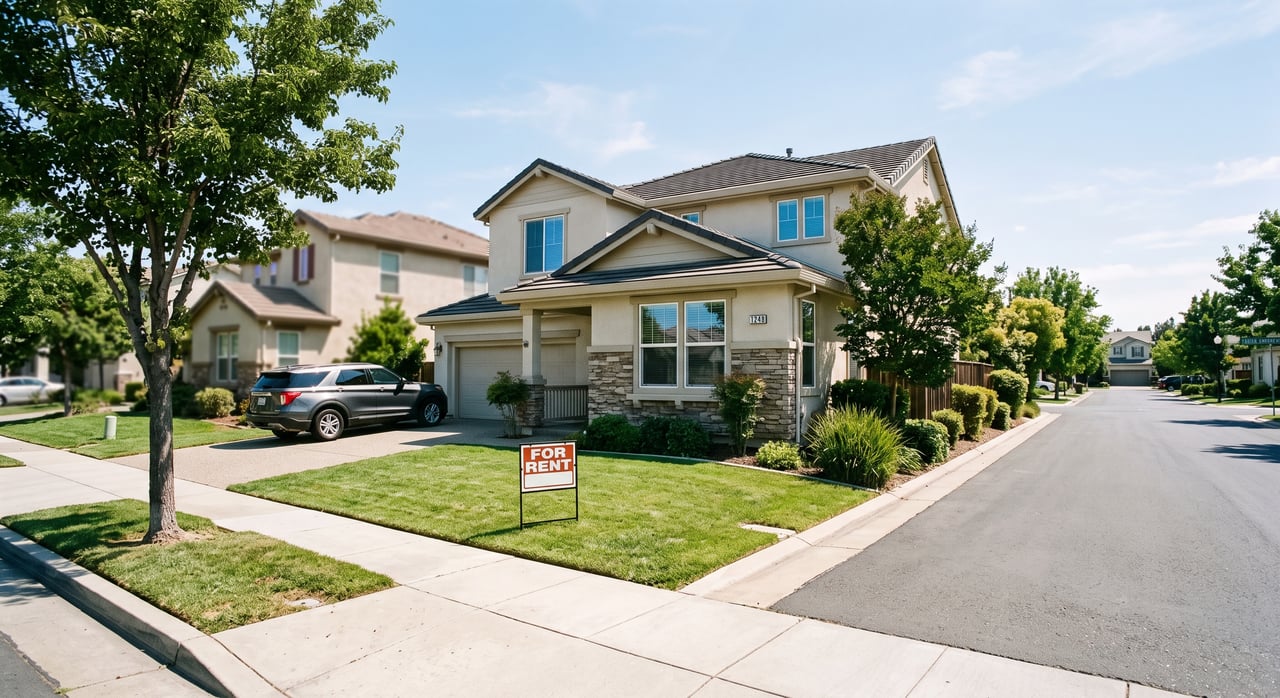
Rancho Cordova Rental Investment
Real Estate Mark Daya September 1, 2026
Real Estate Mark Daya September 1, 2026
Rancho Cordova has attracted serious attention from real estate investors for a straightforward reason: it sits at a favorable intersection of purchase price, rental demand, employment stability, and landlord-friendly municipal governance — at least relative to the City of Sacramento and other California markets.
But 'favorable intersection' is not the same as 'easy money.' The rental investment landscape in Rancho Cordova in 2026 has real numbers behind it — rents that have softened modestly, purchase prices that compress yields at current levels, and a compliance environment that has tightened meaningfully since 2024.
Here is the honest, data-grounded picture of what rental investment in Rancho Cordova actually looks like right now — for long-term rentals, for short-term rentals, and for investors who are evaluating whether the numbers work for their specific goals.
The Long-Term Rental Market: What Rents Are Actually Doing
Average rents in Rancho Cordova have softened over the past year. Zillow data shows the current average rent across all property types at approximately $2,280 — down roughly $460 from the prior year. Redfin's rental market data pegs the median closer to $1,995. A property management firm operating in the market puts the working range for single-family rentals at $1,904 to $2,375, depending on size, condition, and location.
The neighborhood variation within Rancho Cordova is meaningful. Anatolia Village — the master-planned community in the 95742 zip code — commands median rents around $2,800 per month, reflecting its newer construction, HOA amenities, and higher-end tenant profile. Neighborhoods in the 95670 zip code run lower, with rents in the $1,700 to $2,200 range depending on the specific street and property condition.
By bedroom count, the picture sharpens: one-bedroom units average $1,395 to $1,500 per month, two-bedrooms run $1,785 to $2,175, and three-bedroom single-family homes — the most common long-term rental product in Rancho Cordova — average $2,725 per month at the higher end of the market. These numbers vary by source and reflect a market that is warm but not hot — rental demand is sustained, but the rent softening of the past 12 months is real.
The Gross Yield Calculation at Current Price Points
Gross yield — annual rent divided by purchase price — is the starting point for any rental investment analysis. At current Rancho Cordova price points and rent levels, the math looks like this.
A three-bedroom single-family home in the 95670 zip code purchased at $481,805 (the current average for that zip) renting for $2,200 per month generates $26,400 in annual gross rent. That produces a gross yield of approximately 5.5% — below the 6% to 8% threshold that most experienced investors target for single-family rentals in California markets.
In the 95742 zip code, where purchase prices run higher and rents also run higher, the yield compression is similar. A home purchased at $560,000 renting for $2,800 per month generates $33,600 in annual gross rent — a gross yield of 6.0%.
These gross yields are before all operating expenses: property taxes (roughly 1.1% to 1.25% of purchase price annually), insurance, maintenance and repairs (typically 1% to 2% of value annually), property management fees (typically 8% to 10% of gross rents), vacancy allowance (5% to 10% is a conservative assumption), and any HOA or Mello-Roos carrying costs.
After these costs, net yields on Rancho Cordova single-family rentals at current purchase prices typically run 2.5% to 3.5% — positive cash flow in most scenarios, but not the robust cash flow that more affordable markets produce. The investment case for Rancho Cordova is not primarily a yield story. It is an appreciation and equity story — a market where investors accept modest current cash flow in exchange for participation in a market with durable demand fundamentals and long-term value support.
The 95670 Investment Score and What It Means
Aterio, a real estate investment analytics platform, gives zip code 95670 an investment score of 686 out of 1,000 — characterizing it as a strong investment opportunity. The score reflects the zip code's average household income of $100,551, its average rent of $2,164, its increasing property price trend, and a projected housing deficit of 1,870 units by 2030.
That housing deficit projection is the most significant long-term signal in the data. A market where population growth is expected to outpace new supply creates structural support for both rents and values that pure yield calculations do not fully capture. Investors who purchase in Rancho Cordova today and hold through the projected supply deficit period are positioned to benefit from both appreciating values and tightening rental markets — even if current yields are modest.
The practical implication: Rancho Cordova rewards patient investors with a medium to long-term horizon more than it rewards those seeking immediate high yield. If your investment model requires strong current cash flow from day one, today's purchase prices and rent levels require careful underwriting to make the numbers work.
Short-Term Rentals: A Growing but Competitive Market
The short-term rental market in Rancho Cordova has grown significantly — Rabbu data shows a 120% year-over-year increase in active Airbnb listings as of April 2026, with 33 active listings generating average annual revenue of $23,050 per listing. AirDNA puts the active listing count higher at 154, with average annual revenue of $14,700 and an annual occupancy rate of 53%.
The discrepancy between these sources likely reflects different definitions of active listings and different time periods. What both agree on is the directional story: the short-term rental market in Rancho Cordova is small, growing, and increasingly competitive.
At $14,700 to $23,050 in annual revenue, short-term rental income on a Rancho Cordova property is roughly comparable to — or modestly above — what a well-managed long-term rental would produce, before accounting for the significantly higher management intensity and operating costs of short-term rentals. Cleaning fees, platform commissions, furnishing costs, and the time investment of active short-term rental management all reduce the net return below the gross revenue figure.
The peak short-term rental season runs June through August, with July averaging $2,277 in monthly revenue per listing. January and February are the slowest months at roughly $1,500. The moderate seasonality is a relative advantage compared to resort markets — Rancho Cordova's year-round utility as a transit hub and employment corridor produces more consistent demand than pure leisure destinations.
The 2026 Compliance Landscape Every Landlord Must Understand
The City of Rancho Cordova's rental compliance environment has tightened meaningfully since 2024, and landlords who are not current on the regulations face real legal and financial exposure.
California's 2026 rules have updated electronic deposit return procedures and extended the tenant response time for evictions to ten days — changes that affect the eviction timeline and the procedural requirements for security deposit handling. Security deposits are strictly capped at one month's rent for nearly all residential properties under current California law — a change that reduces the financial buffer landlords previously held against tenant damage.
The City of Rancho Cordova now requires rental properties to meet specific compliance standards, and the property management firms operating in the market are explicit that a single month of vacancy or one costly legal dispute can erase an entire year's profit at current rent levels. California's Fair Housing laws apply fully in Rancho Cordova, and violations — even technical ones — carry significant penalty exposure.
For self-managing landlords, the 2026 compliance environment requires genuine familiarity with California landlord-tenant law — not passing knowledge. For investors considering professional property management, the cost of 8% to 10% of gross rents needs to be weighed against the cost of a single eviction ($1,000 to $5,000 in legal fees, minimum) or a Fair Housing violation.
Rancho Cordova remains more landlord-friendly than the City of Sacramento, which has just-cause eviction protections that Rancho Cordova has not adopted. That regulatory advantage is real — but it does not eliminate the compliance requirements that California state law imposes uniformly.
Who Rancho Cordova Rental Investment Makes Sense For
The honest summary: Rancho Cordova rental investment in 2026 makes the most sense for investors who are prioritizing long-term equity accumulation over current cash flow, who have the financial strength to carry a property through vacancy periods and maintenance cycles without distress, and who are prepared to manage the compliance environment competently.
It makes less sense for investors who need strong immediate cash flow to service debt, who are planning to self-manage without genuine familiarity with California landlord-tenant law, or who are treating a Rancho Cordova rental as a passive income stream with minimal ongoing attention.
The 4,029 fully paid-off homes in Rancho Cordova are a data point worth sitting with: those owners achieved a financial position — zero debt, full rental income, significant appreciated equity — through the patient accumulation that time and a good entry point produce. The investors who will be in that position in twenty years are the ones who entered the market with clear eyes about what the numbers currently support and a long enough horizon to let the equity equation work.
We help investors evaluate specific properties — not just the asking price but the full carrying cost, the realistic rental income, the neighborhood rental demand, and the compliance considerations that affect net returns. If you are evaluating Rancho Cordova as a rental investment destination, that conversation is where we start.
Stay up to date on the latest real estate trends.

Real Estate

Real Estate

Real Estate
Real Estate

Real Estate