Wilton's Median Price Matches the Suburbs. Getting a Loan on It Doesn't.
August 27, 2026
August 27, 2026
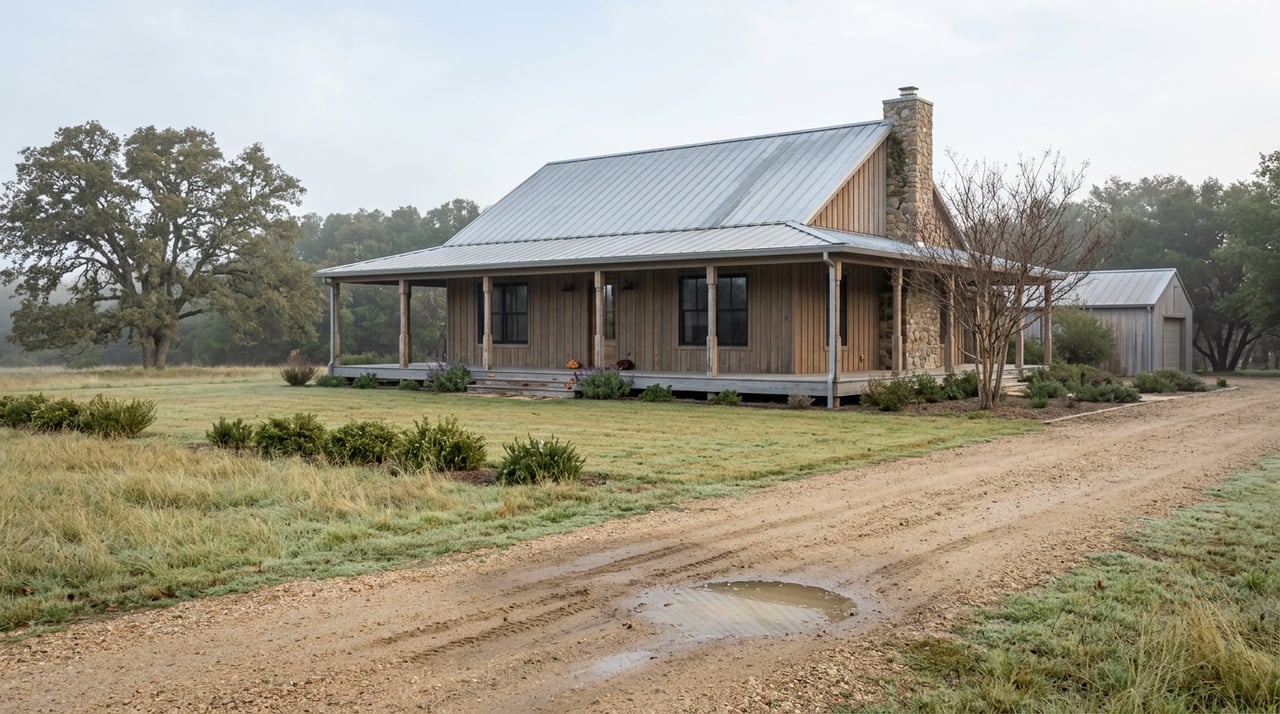
Say two buyers each have $1,050,000 to spend on a home in the Sacramento region. One buys a four-bedroom in a subdivision off Bond Road in Elk Grove. The other buys a similar-sized home on five acres in Wilton, fifteen minutes away. On paper, they paid almost the same number. Redfin put Wilton's median sale price at $1,049,429 in June 2026, essentially flat year over year at a 0.76 percent dip. Movoto's June listings showed a $999,000 median asking price at roughly $460 a square foot, with homes spending a median of 64 days on the market. Zip-level data for 95693 covering the trailing twelve months landed in the same range, a $994,394 median across 83 closed sales.
Those numbers sit close enough to a suburban median that a buyer scanning listings could reasonably assume the two purchases work the same way. They don't. The moment a Wilton parcel crosses roughly five acres or runs on a private well and a septic tank instead of a city hookup, the deal starts operating under a different rulebook: bigger down payments, thinner appraisal comps, mandatory water and waste inspections, and in some cases a decade-long tax contract that comes with the land whether the new owner asked for it or not. The price is the last thing that's similar.
Most conventional lenders are built to finance homes in subdivisions and tract developments, where hundreds of nearly identical properties sell every year and appraisers have no trouble finding comparable sales down the street. Wilton doesn't work that way. A property on ten, twenty, or forty acres gets treated as a non-standard residential asset, and underwriters respond by asking for more.
| Suburban tract home | Wilton acreage property | |
|---|---|---|
| Typical down payment | Often 5 to 20 percent on conventional loans | 20 to 30 percent is common once acreage or a well and septic enter the picture |
| Appraisal comps | Dozens of recent sales within a mile | Comps often require an expanded search radius or fewer than three matches |
| Utility underwriting | Municipal water and sewer, no added inspection | Well flow test, water quality test, and septic inspection required before closing |
| Value composition | The home itself carries nearly all the value | Lenders want the home, not the land, to carry the majority of value or the loan can be declined as land-dominant |
Some lenders also cap acreage outright, at ten or twenty acres, sometimes as low as five, even on loan programs like VA financing where the government itself sets no acreage limit at all. That cap is a lender overlay, not a federal rule, which means the difference between financeable and not can come down to which loan officer you call. A buyer eyeing a larger Wilton parcel is better served getting that answer before writing an offer than after.
A well and a septic tank do not show up as a line item most buyers remember from closing. They show up as decisions made three weeks earlier, or three weeks later, than everyone assumed.
Federal loan programs, including FHA, VA, and USDA, treat private water and waste systems as safety issues, not preferences. A well typically needs to sit roughly 100 feet from the septic system, though exact setbacks vary by program and by Sacramento County's own health code. The water itself has to test clean, with results usually required to be dated within 180 days of closing, and needs to produce a minimum flow rate, commonly cited around 3 to 5 gallons per minute. The septic system has to show no evidence of failure.
None of that happens automatically. It happens on this rough sequence, and each step adds real days to escrow:
A buyer who orders these tests before making an offer controls that timeline. A buyer who waits until the middle of escrow is negotiating from a weaker position, with a clock already running and a seller who knows it.
A meaningful share of land around Wilton carries a Williamson Act contract with Sacramento County, an agreement most buyers have never heard of until it shows up in title work. Under the California Land Conservation Act, a landowner agrees to keep a parcel in agricultural or open-space use for a rolling ten-year term that renews automatically each year unless someone files a formal notice to stop it. In exchange, Sacramento County's Assessor values the land using an income-capitalization method tied to what it can earn as farmland, rather than what it could sell for on the open market. The state's Department of Conservation has long estimated that this can cut a landowner's property tax liability by 20 to 75 percent a year, depending on the parcel and its agricultural income.
The trade-off is real. While the contract is active, the land generally can't be subdivided into smaller residential parcels or developed commercially. Getting out early isn't a matter of just asking. It requires Board of Supervisors approval and a cancellation fee that state law sets at 12.5 percent of the property's unrestricted value, a number worth knowing before assuming a large parcel can simply be split and resold later.
Sacramento County's own assessor's office flags a timing detail that trips up more than a few buyers and sellers: a contract has to be recorded before the January 1 lien date to take effect that tax year, or the benefit doesn't start until the following year. On a property changing hands mid-year, that single date can shift when a new owner actually sees the lower bill. For a buyer who wants to farm or keep horses, the Williamson Act contract is often a net positive. For a buyer hoping to eventually subdivide or build out the parcel, it's a restriction that needs to be priced into the offer, not discovered in escrow.
The same Cosumnes River that draws paddlers and anglers to the Cosumnes River Ecological Preserve also defines flood-zone boundaries that a lender's flood certification will flag during underwriting. Wilton's rural setting also means the local Wilton Fire Protection District, rather than a municipal fire department, is the frontline coverage for a community where barns, outbuildings, and defensible space are part of the insurance underwriting conversation in a way they simply aren't for a stucco subdivision.
None of this makes Wilton uninsurable. It means insurance quotes belong in the due diligence period, gathered against the specific parcel and its flood zone and fire district status, rather than assumed to mirror whatever a buyer paid on a tract home ten miles away.
The price convergence between Wilton and its suburban neighbors is coincidental, not structural. Two purchases that land on the same number on paper can carry different capital requirements, different closing timelines, and different tax and insurance profiles for as long as the buyer owns the land.
For a buyer weighing an acre in Wilton against a quarter acre in Elk Grove or Rancho Cordova, the more useful comparison isn't price per square foot. It's how much cash needs to be ready at closing, how much flexibility the land actually offers for future plans, and how much schedule risk the buyer can absorb if a well test or septic inspection comes back with bad news. For a seller of Wilton acreage, understanding who's actually shopping matters just as much. A cash buyer or one already lined up with a rural-specific loan program moves faster than a buyer assuming their suburban pre-approval will transfer without a hitch.
Does every property in Wilton have a well and septic system? Not universally, but it's common. Homes in Wilton typically sit on lots ranging from two to ten acres and often rely on private wells and septic systems rather than city water and sewer, so confirming which system a specific listing uses is one of the first calls to make, not something to assume from the photos.
Does a Williamson Act contract transfer when the property sells? Yes. The contract runs with the land, which means a new owner is bound by the same agricultural or open-space restrictions the previous owner agreed to. This is worth checking through the county before writing an offer, since it affects both future plans for the land and the ongoing property tax bill.
If you're weighing a move into Wilton, or trying to decide whether the acreage lifestyle fits your timeline and financing picture, Sac Platinum Realty has spent years helping Greater Sacramento buyers work through exactly this kind of comparison. Let's talk about what your number actually buys, and what it takes to get there.
Stay up to date on the latest real estate trends.


Real Estate
Real Estate

Real Estate

Real Estate