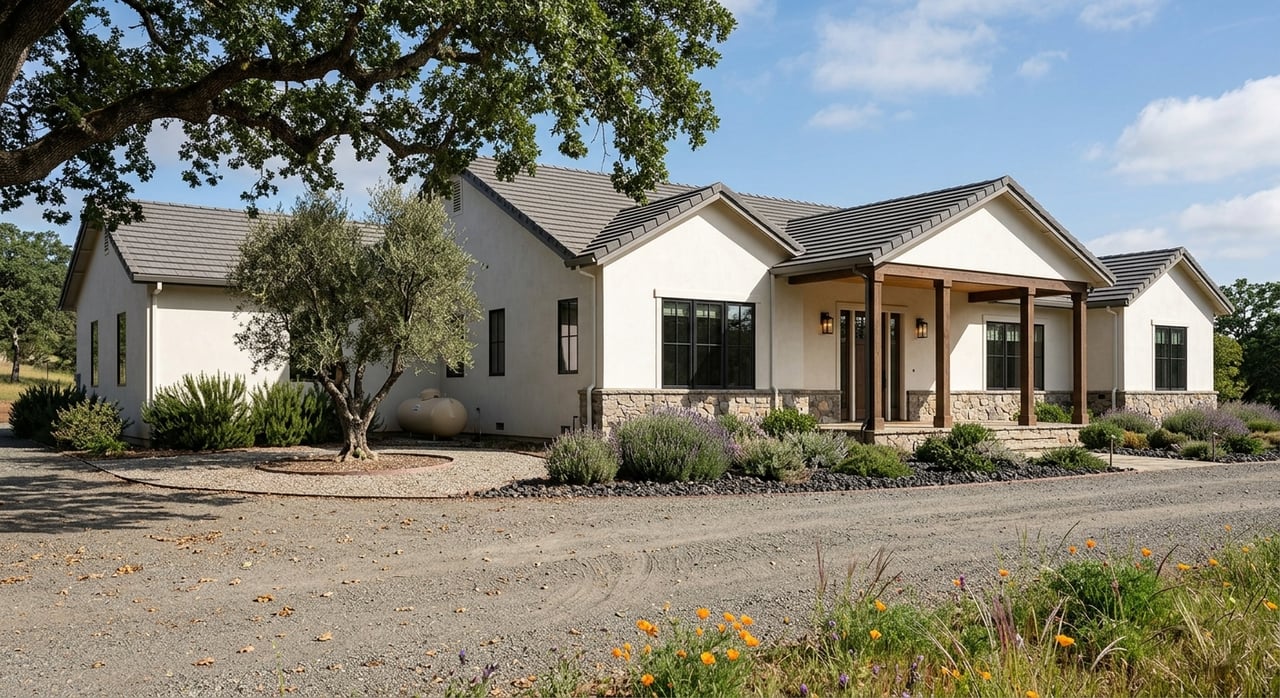
Thinking About Acreage? A Homebuyer Guide To Wilton
May 28, 2026
May 28, 2026
If you are dreaming about more space, more privacy, and room to spread out, Wilton may already be on your radar. Acreage can offer a very different kind of homeownership than a typical subdivision, but it also comes with more parcel-specific questions and responsibilities. This guide will help you understand what makes Wilton unique, what to verify before you buy, and how to approach an acreage purchase with more confidence. Let’s dive in.
Wilton offers a rural setting that stands apart from more built-up parts of the Sacramento region. According to the U.S. Census, Wilton had 5,958 residents in 2020 across 29.0 square miles of land, which works out to a low population density of 205.4 people per square mile. That lower-density pattern is part of what attracts buyers who want breathing room.
The area is also heavily owner-occupied. Census data shows a 92.7% owner-occupied housing rate and a median owner-occupied home value of $891,200. For many buyers, that points to a market where people tend to stay put and value the lifestyle that comes with rural residential property.
Sacramento County describes the broader Cosumnes area, which includes Wilton, as rural and primarily agricultural. The county also notes extensive biological resources such as vernal pools and oak woodlands, along with limited infrastructure outside the Urban Policy Area. In simple terms, Wilton can feel more open and land-oriented, but it does not function like a typical suburban tract market.
Buying acreage in Wilton is often about choosing space over convenience. You may get more separation between homes, larger lots, and a setting shaped by agriculture and open land. At the same time, you should expect fewer urban services and more property-specific upkeep.
Local context matters here. Sacramento County has an Agricultural Advisory Committee that addresses urban and agricultural interface issues and Right-to-Farm complaints. That is a practical reminder that normal farm activity is part of life in this area, and buyers should be comfortable with that before purchasing.
Commute patterns can also look different. Census QuickFacts lists a mean travel time to work of 34.8 minutes for Wilton. If you work in Sacramento, Elk Grove, Rancho Cordova, or elsewhere in the region, it helps to think through your daily drive and how often you want to make it.
One of the biggest differences between acreage and tract housing is that utilities may not be simple or standardized. Sacramento County’s housing element says areas outside the Urban Policy Area, including Cosumnes, lack public sewer and water. Wilton Fire Protection District also states that the area has no public water.
That means you need to confirm exactly how a specific property is served. Instead of assuming the setup is similar to a nearby parcel, verify whether the home uses a private well, septic system, or another arrangement. On acreage, the details can change from one parcel to the next.
Sacramento County Environmental Management handles wells, septic systems, and small water systems in the unincorporated county. The department states that any well constructed in Sacramento County must have a permit before construction. Its septic program also notes that the permit process depends on whether the parcel is in a standard area or a test-drill area.
If a home relies on a private well, you are not just buying a water source. You are also taking on responsibility for maintaining it. State guidance for private domestic wells says the owner is responsible for maintenance, recommends annual water testing, and notes that California does not regulate water quality in most private domestic wells.
That makes due diligence especially important. You will want to ask for available records, understand the well’s condition and history, and look at its location in relation to possible contamination sources. The same state guide emphasizes setbacks from septic systems and other contamination sources, which is one more reason to study the site plan carefully.
For many buyers, this is a mindset shift. In a neighborhood with public water, service is usually simple. On acreage, your water source is a property system that deserves close review before closing.
A septic system can be perfectly normal for a rural property, but it should not be treated like a box to check. Its condition, permitting history, and location all matter. Because Sacramento County Environmental Management oversees septic systems in unincorporated areas, buyers should confirm what records are available for the parcel and whether any permitting issues need follow-up.
It is also smart to understand whether the parcel falls in a standard area or a test-drill area, since the county says the permit process differs depending on that status. If you are planning future improvements, those details may matter even more. A larger parcel does not automatically mean fewer restrictions.
Acreage purchases often require a wider lens than a standard suburban home inspection. The California Department of Real Estate advises buyers to inspect electrical, plumbing, and structural integrity and to account for special taxes, assessments, closing costs, and ongoing maintenance expenses. Those basics still apply in Wilton, but you may also need to think more broadly about site systems and land use.
Here are some smart inspection and verification priorities for a Wilton acreage purchase:
The key idea is simple: acreage is not just about the house. You are buying the systems, access, and responsibilities that come with the land too.
If you are considering Wilton, do not overlook weather and road access. In January 2023, Sacramento County issued an evacuation order for Wilton because flooding was imminent and roads could become impassable. The county warned that exit routes had flooded quickly and rising water could cut off access.
That does not mean every property has the same risk, but it does show why buyers should ask specific questions about access during major weather events. A parcel may look straightforward on a sunny day and function very differently in a storm. Before you buy, it is wise to understand how residents enter and exit the area, what nearby roads are prone to flooding, and how the property itself handles water.
Fire readiness can also look different on acreage. Wilton Fire Protection District says it protects 59 square miles of rural land and is staffed by full-time shift captains plus resident volunteer firefighters. That rural service context is worth understanding as you evaluate any property in the area.
Vegetation management is another practical issue. The district requires annual burn permits for burning grass, brush, and tree trimmings. If you are buying a parcel that needs regular clearing or maintenance, this is not a minor detail. It becomes part of how you manage the property year after year.
Because Wilton has no public water, fire planning may also differ from what buyers are used to in more urbanized areas. Cosumnes CSD’s hydrant-flow instructions state that Wilton Fire Protection District projects do not require a fire-flow test because there is no public water. That is another reminder that rural infrastructure works differently here.
Some buyers look at acreage and immediately imagine a workshop, barn, expansion, or other improvements. That is understandable, but it is important to verify what is allowed before you count on those plans. Sacramento County says land-use decisions are governed by the General Plan, Community Plans, the Zoning Code, and limited-area plans.
The county’s interactive map combines key parcel details such as general plan designation, community plan designation, zoning, parcel information, water districts, fire districts, the Urban Services Boundary, and Williamson Act contracts. For a buyer, this means future use is often tied to the specific parcel, not just the general area.
Wilton Fire Protection District also says plan review and approval for proposed construction is handled by Cosumnes Community Services District. So if you are thinking beyond the existing home, expect a process that can differ from what you might see with a tract property in a more built-out neighborhood.
If a parcel is in the Williamson Act, you need to understand what that means before you move forward. Sacramento County Assessor information explains that only land in an agricultural preserve is eligible, and the land is restricted to agricultural or compatible open-space uses. It is also assessed based on actual use rather than full market value.
The state guidance summarized by the county says agricultural preserves are generally at least 100 acres and Williamson Act contracts roll forward on a 10-year term. While not every Wilton parcel will be affected, this is an important item to verify because it can shape how the land may be used.
For buyers, the takeaway is clear: do not assume a parcel’s size means unlimited flexibility. Check the county mapping and parcel information early so you understand any land-use restrictions before you get too far into the process.
In a subdivision, nearby homes often share similar utility setups, lot conditions, and development standards. In Wilton, that is not always the case. One property may have a very different water setup, access pattern, zoning context, or improvement path than the parcel next door.
That is why local guidance matters so much when buying acreage. Instead of thinking only in terms of neighborhood comps or home features, you need to look closely at the land, infrastructure, approvals, and ongoing maintenance picture for the exact parcel you want.
A confident acreage purchase usually comes down to asking better questions early. The more clearly you understand the property systems and county context up front, the fewer surprises you are likely to face later.
If you are considering acreage in Wilton and want help thinking through the parcel-level questions that matter most, Sac Platinum Realty can help you approach the process with clarity, local perspective, and steady guidance.
Stay up to date on the latest real estate trends.

Real Estate

Real Estate

Real Estate
Real Estate

Real Estate